1000 Miles: Luke Prescription Cycling Sport Sunglasses from Optical Factor

Seven months ago, I wrote Finally: Cheap Prescription Cycling Sunglasses with Optical Factor, giving early impressions of their Luke Prescription Cycling Sport Sunglasses.

I’ve now used them for about 1K miles, including 12+ hours on the Davis Double Century. Photos from that event during different times of day below. My rides this spring with them have span from 50F to 90F. My takeaways:

  • TLDR: I’d buy them again.
  • They’ve been great. While the Davis Double Century ride was cooler (85F) than in most years, I still felt very hot in spurts during the climbs (close to 9K feet total). I didn’t feel distracted by the glasses despite reduced air flow. This might change as the weather gets warmer and I do more stressful (peak power) climbs. My helmet doesn’t have a good spot for holding the glasses, otherwise I’d take off my glasses during hot climbs.
  • I thought that the outer lenses picked up a lot of scratches but I learned these all came off with lens cleaner. I just applied some and the lenses look brand new again. I’m still using the original wraparound outer lens but the glasses come with multiple replacements of various tints. The glasses do pick up fingerprints / blemishes like crazy – I don’t know how expected this is for Oakleys or other premium cycling glasses.
  • Prescription vision has been great, no headaches or other issues. Again, these were $50 per pair (I bought two).
  • The only area of improvement I’d like is a stopper against the forehead – you can essentially put these glasses into your eyes – this sounds worse than the reality. The glasses don’t really move during riding, sometimes I’ll push them slightly up so they’re covering more of the vertical vision area.

How Real Estate Agents and Market Experts are Failing You

Expect home price appreciation to “fall further,” Mark Fleming, chief economist at First American and author of the report said, “as the hot sellers’ market of early 2022 turns in favor of buyers.” (Marketwatch, October 22, 2022)

There’s a home one minute walk from me that recently sold for $1.2M after 5 months on the market. A couple of weeks before they listed their house this past Spring, I had closed on my new house, reasonably identical, for $1.4M.

Seeing their house close for 11% below original asking and others’ thoughts about a buyer’s market, I had feelings of guilt that I had been made a fool. During the buying process, my agent had told me of another home, slightly larger, that just sold for 1.6M a few days prior. My price was supposed to have been a steal. But…

If I had waited six months, I’d be in a buyer’s market and look at the savings I could have had. I’ve screwed myself and my family for years.

I went deeper to understand the individual economics, and it turns out this is wrong. As I write this, mortgage rates today are around 7%. Someone who buys a house (standard 20% down, 30 year term) for $1.1M today is going to pay about the same in monthly costs that I did even though their price is 23% less (the difference in down payment is ~$60K). (Use Bankrate to see this for yourself)

Anyone who pays more than $1.1M is technically paying more than me for their house. To really see if I made a big mistake, I have to see if similar homes drop below $1.1M in the near future.

This isn’t what we’re taught however. The articles above, and even the agent who sold my house (more on that below), the story is prices drop = buyer’s market, prices rise = seller’s market.

What’s being missed is the actual cost to buyers and what rising costs mean to sellers.

For both buyers and sellers, agents should be comparing house prices based on costs, almost in deflationary / inflationary terms. Your targeted X monthly spend would buy you a home at $1.1M today, $1.5M 6 months ago, and $1.7M 12 months ago.

When I listed my previous house, my agent was very optimistic it would sell for over $1.2M. This was right at the beginning of the Ukraine/USA conflict and rising interest rates. Almost immediately, we (and everyone else in the local market) were dropping prices. It ended up selling 4.5 months later for just $870K. This was an incredibly deflating experience. My agent told me interest rates are rising, this is becoming a buyer’s market, etc.

Looking back on this, what she should have said is, when we went to market the typical buyer with $X spend would be able to afford $1.2M. What that spend looks like at this moment is only $1.1M. Should we change the price to match this?

Instead, it was more like, people think this is high, they can’t afford the same level of house, no one is selling in this market, we should lower. It was vague and reactionary.

If I had been given that information, it would have been very clear what to do, and to which target I needed to reach the same type of buyer.

To show you this, using the $870K price point:

  • 7% = $5300/month
  • 6% = $4838
  • 5% = $4400
  • 4% = $3983

Paying $1.2M at 4% rates (around the time we started to sell) would be $5219/month; buying my former house now for $870K would have been around the same monthly cost as buying it for $1.2M 6 months ago.

Does this imply a buyer’s market? I argue that this is neither a buyers nor sellers market.

If I had known what was about to happen (war, economy, inflation, interest rates) around the time I was make the decision to sell, I would not have put the house on the market. I ended up suffering an expectation loss of over $300K, nearly 30%. For new sellers, who already see these rising rates, why should they sell?

In other words, if I were to sell my new home right now I am totally screwed. We’ve seen that a buyer purchasing for $1.1M right now would have been able to afford $1.4M six months ago. I can’t expect more than 1.1M for it. I can’t afford to lose money on the transaction, so I hold off and wait. Even if I got a better job that required me to move, this impact of interest rates might make it impossible for me to do so in the coming years.

Over the long term, more sellers will hold off because they can’t get a worthwhile price, even though buyers will actually be paying the same amount in monthly costs. No one wins, buyers nor sellers.

The interest rate is a friction that prevents transactions and mobility around the nation. A hot real estate market is hot for both buyers and sellers. When sellers can benefit from selling, they’re more likely to do so. It doesn’t work for just one party, at least when it comes to mortgages.

Sellers need to understand changes in actual buyer cost and the affect on their selling price. Buyers need to understand their cost and how this relates to price in the market over time. (Is a house price rise of 20% fair? That depends on what the cost was at those moments in time)

The Bay Area Parent’s Shopping Guide for Your Baby’s First Six Weeks

In July, I happily became a first-time parent. I quickly had to learn what to buy (and why) to keep myself, mommy, and baby in good spirits. Thus, I’d like to share my insights with other first time parents, coming from the perspective of someone who lives in the Bay Area (think: more moderate weather, mainly using a car, more fortunate in terms of financial means).

Everything below is something our family has actually purchased and used, referred from family friends, Amazon.com reviews, or Wirecutter. I’m focusing just on the stuff we used for our baby’s first six weeks.

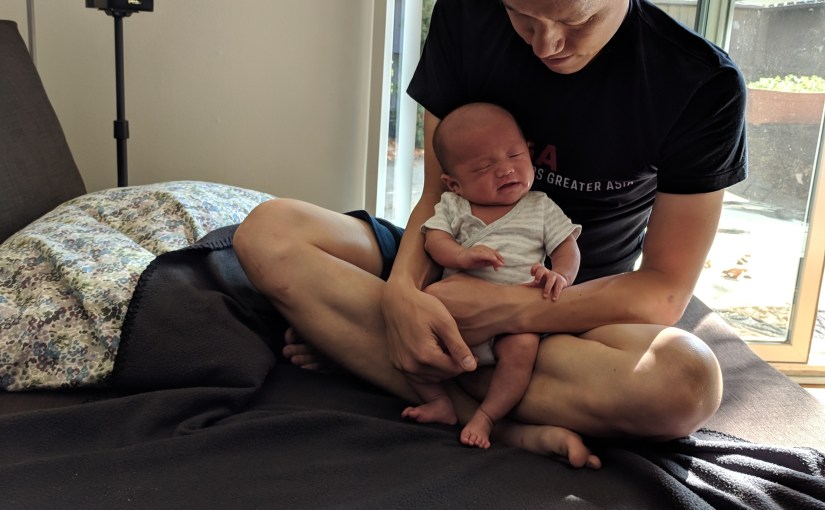
img_20180905_232258

Mom’s Recovery

Yunga Tart Seatz Bath

Sitz Bath Soak 32oz (2-Lbs) Epsom Salt With Niaouli, Geranium, Lavender, Frankincense, Juniper Essential Oils & Vitamin C Crystals – Natural Hemorrhoid Relief, Fissures, Postpartum

If you wife has a natural birth, you absolutely need to get the two items above to help with physical recovery. One of the things I learned is that the delivery uses the same muscles as going #2 (poopie). So think of the mother having the biggest poopie of her life (6-8 pounds!), and pushing for hours at a time. That’s not normal – think of the muscle soreness she will face. My wife cried from the pain post-birth until we bought these.

Feeding

Spectra Baby S1 Breast Pump

This was definitely one of the high ticket items we wondered about spending on because the hospital gave us an electric pump. Once we got the Spectra, we realized rechargeable battery = portable = going places with infant for more than a few hours will actually be pleasant.

Simple Wishes Signature Hands Free Breastpump Bra, Black, XS-Large

Lets the mother breast pump with her hands free – she can now use a phone, eat, etc. My wife didn’t think she needed it at first, but I doubt I could take this away from her now without causing big problems.

Haakaa Silicone Breastfeeding Manual Breast Pump Milk Pump 100% Food Grade Silicone BPA PVC and Phthalate Free

As the mother breastfeeds on one side, use this manual pump to collect milk from the other side – often, the other side may start leaking milk on its own. Don’t waste liquid gold!

Medela Breast Milk Cooler Set

Medela Breast Milk Storage Solution Set

Philips Avent Natural Baby Bottle Blue Gift Set, SCD206/12

There are lots of brands like Philips, Medela, Dr. Browns, etc., for baby bottles They all want you in their ecosystem, thus pick one brand and assume you’ll stay with it across all your bottle-related items. These brands are mostly incompatible with each other, a huge pain in the butt, and something I understood too late. If you buy the items I list here, you’ll be fine but I’d buy from one brand if I did it over.

Boppy Nursing Pillow and Positioner, Notebook Black/Gold

Boon Lawn Countertop Drying Rack Green

Really useful and aesthetically pleasing drying rack that we use exclusively for baby stuff.

General Health Around the Baby

Mountain Falls Advanced Hand Sanitizer with Vitamin E and Aloe, Pump Bottle, Compare to Purell, 67.59 Fluid Ounce (Pack of 2)

Clean your hands, without sacrificing softness!

Angelcare Baby Bath Support, Aqua

Small babies are not exactly easy to handle normally, let alone when wet. This helps when it’s bath time.

Johnson’s Head-To-Toe Extra Moisturizing Baby Wash

Johnson’s Baby Powder

Desitin Baby Diaper Rash Maximum Strength Original Paste

Use this on your baby’s butt during diaper changes to prevent diaper rash. Also useful for the neck folds area.

Almond Oil

Use as an occasional lotion for your baby and to prevent stretch marks for the mother.

Babyganics Wipes

We currently use these and like them over the Huggies ones as they are less wet. \

Baby Nasal Aspirator NoseFrida the Snotsucker by Fridababy

Babies get boogers and someone (me) has to clean them.

Safety 1st Steady Grip Infant Clipper, Colors May Vary

Babies are well known for their razor-like claws (fingernails)

Summer Infant Contoured Changing Pad

We don’t have a dedicated changing table (we are in a small apartment and space is a premium), so we place this on the floor or sofa (I prefer floor). We also bought a cover for the pad, but our son kept peeing all over it and we quickly realized the cover didn’t add any benefits other than aesthetics. The cover is hard to wash, but you can easily rinse or wipe down this changing pad.

Transportation

Chicco KeyFit 30 Infant Car Seat

You can’t leave the hospital without a car seat, these aren’t the days of beige Opals, optional seat-belts, and holding a baby in your arms in the car. This seat is well regarded and scored fantastically on crash tests.

Baby Jogger 2016 City Mini 3W Single Stroller

When I put this together, I realized, “this is what quality and attention to detail look like”.

Baby Jogger Car Seat Adapter Single for Chicco and Peg-Perego – 1967207

BEST STROLLER ORGANIZER for Smart Moms

Helps you carry more stuff on the stroller. YOU WILL HAVE MORE STUFF.

Ethan & Emma Stroller Hook, Carabiner Shape

This came free with the stroller organizer – check for an offer on the Amazon page for a code to get the hook.

Summer Infant Snuzzler Infant Support for Car Seats and Strollers, Ivory

Necessary for your infant’s first couple of months when he’s inside the Baby Jogger stroller. The Chicco KeyFit has its own infant support included.

Baby Bjorn Baby Carrier Original – Dark Blue, Cotton

See all the parents who walk with their babies with a kangroo pouch-like thing on them? This is it.

i play. Baby Brim Sun Protection Hat, Gray, 0-6 months

Sleep

Fisher-Price Deluxe Rock ‘n Play Sleeper, Moonlight Meadow

When we mentioned we bought the Rock ‘n Play to our doctor, she said “Babies LOVE the Rock ‘n Play.” So true. More sleep for the baby means more sleep for you.

LectroFan High Fidelity White Noise Machine with 20 Unique Non-Looping Fan and White Noise Sounds and Sleep Timer, Global Power Edition

I use this white noise machine for myself right now but I hear it can be helpful for babies too, in terms of drowning out random noise to help him sleep. Oddly, our baby sleeps through anything right now – I can vacuum a few feet away from him. When he becomes more sensitive, we’ll have to put this next to him.

SwaddleMe By Your Side Sleeper

If you want your infant to sleep in bed with you, this keeps him protected.

Covidien 2022A Curity Maternity Pad, 4-3/10″ x 12-1/4″ Size (Pack of 14)

GORILLA GRIP Original Slip-Resistant Mattress Pad Protector (52″ x 34″), Bed Wetting & Incontinence Cover Absorbs up to 8 Cups, Waterproof, Leak Proof Edge, Pads Machine Washable, Toddler

These two items are for the mother – after pregnancy, she may leak fluids for some time, and these prevent problems from leaks.

HALO SleepSack Micro-Fleece Swaddle, Baby Blue, Newborn

Swaddling is highly recommended by well, everyone, for the early months. Our son will wildly swing his arms while lying down, so I think swaddling helps calm him down.

Thinking about the SleepSack makes me want to sleep myself.

Other Notes

We haven’t purchased a baby humidifier, baby monitor, or bottle warmer. I still don’t feel the monitor is necessary because we live in a small one bedroom (typical Bay Area!). Bottle warmer reviews said warmers are not much (if at all) better than just warming up bottles in a pot. We use a tea kettle to quickly heat up water and then put the bottle with that hot water in a mug for warm milk in 5 minutes. As for a humidifier, maybe that’s in our child’s future. The Bay Area is definitely drier compared to the East Coast or many parts of Asia.

Other things not covered here but you will want to buy:

  • Formula – even if you want to focus on breastfeeding, have formula as a backup. You can make it very quickly and it will start at room temperature in times where there may not be enough milk. I suggest Costco’s Kirkland brand.
  • Diapers – Wirecutter likes the Target and Walmart house brand diapers. We have not tried them, but I am not averse to doing so. Either way, buy diapers from Costco. You can also buy from Target or Amazon, depending on different promotions that you prefer. Make sure the diaper you get has a visual indicator on the front of wetness – very useful. We use Huggies and Pampers and have also tried Babyganics.
  • Diaper bag we were lucky enough to have loving relatives who got us a great diaper bag. Inside the diaper bag, place travel-size bottles of hand sanitizer and baby powder along with the typical diapers, small changing pad, etc.
  • Clothes – buy generic stuff at Walmart / Target. You’ll probably be gifted them too.

For the Grandparents

Nixplay W10B Seed 10.1″ Widescreen Wi-Fi Cloud Digital Photo Frame

I’d long wanted to get my parents a photo frame that could automatically update with new photos from Google Photos. This frame had been well reviewed in the past, but only literally in the last month did Nixplay get connected with Google Photos via API.

This means that after setup (very easy), the photo frame automatically checks a designated shared folder for new photos to show in the frame. You simply add new photos to that folder from your phone – this convenience to keeping baby and grandparents connected is great and my dad loves it.

That’s all for now!

The Case for Entering the NBA Draft and Economic Opportunity Costs

Occasionally I hear Jim Barnett and Bob Fitzgerald, the Warriors’ TV announcers, talk about how players who stay in college for additional years do not lose much from doing so – that not only do such players get better and become more mature from the experience, they also end up making the same amount of money (or perhaps more) from elongated careers.

As a Cal Bear, this makes me think of the upcoming decisions of super freshman Ivan Rabb and Jaylen Brown. Sorry Jim and Bob, I disagree with you because of former Warrior Chris Porter.

Porter is expected to be a late lottery pick in the June NBA draft. He could have been a lottery pick had he come out after an All-American junior season last year.

Andy Katz, ESPN.com (May 2000)

Chris Porter lost potential lifetime financial security by staying in school

Over 15 years ago, Chris Porter was a hot NBA prospect, projected to be a lottery pick after his junior year. He was featured on the cover of Sports Illustrated. A year later, after giving scouts a full year to focus on his weaknesses, he was drafted by the Warriors at the 55th overall pick (I was very excited by this pick, as I remember).

He went on to have a nothing career.

This is the danger of giving up guaranteed money.

Let’s break this down for Rabb and Brown.  As of today, according to DraftExpress (a reputable source on pre-NBA talent), Jaylen Brown would be the 4th pick (or is the 4th best prospect, however you want to read it) in this summer’s draft. Ivan Rabb is 14th. Both would be considered “lottery picks”, draft picks for teams that do not make the NBA playoffs, just as Chris Porter could have been so long ago.

So why should both Rabb and Brown leave for the NBA?

In a worst case scenario, any 1st round draft pick gets two years of guaranteed money upon signing. As of this year, the amount for the lowest 1st round draft pick (30th) is approximately $1.9 million dollars. Even if a rookie has a terrible agent (see: Ricky Williams / Master P), he would still more than likely get at least $1.5 million. (I am going to leave any net present value arguments out of this entire discussion, as well as taxes, agent fees, etc.)

If their draft positions hold, Rabb and Brown would get closer to $3M and $7M, respectively.

Minimum $1.5M dollars and a (virtually) guaranteed spot at worst case on a NBA basketball team for two years is nothing to scoff at, especially if you did not grow up in a fairly affluent family. I went to Business School at Kellogg (Northwestern). If I were offered this deal today, I would absolutely take the $1.5M now, despite having a good amount of work experience and knowing I can do other things. Thus to paint 20 year olds (who are probably unable able to do other things at this state in their lives) as silly for taking the money is a bit ridiculous.

Yes, it sounds great to believe in your talent, that the money will always be there, but that’s actually the dumb move.

Taking money now is the smart thing, if it is guaranteed. For any player’s long term development, he has to be in a good team situation in which he can grow (compare San Antonio Spurs vs Brooklyn Nets) – this is something a player has much less control over and thus, has much more risk. The money is guaranteed while the opportunity to play, be liked by a coaching staff, is not.

What are the opportunity costs for staying?

Other than having your draft position go down, costing you literally millions of dollars, if you get booted to the second round as Chris Porter, you will not have a guaranteed contract, or a contract at all. Let’s ignore the chance for life-changing injury too, which could happen but is rare.

If you go to the NBA DLeague (the minors) on your own to try to make it to the NBA, you can make up to $25K a year. This could easily be 19K or 13K as well.

In other words, if your stock falls for whatever reason and you fall out of the 1st round, you will AT BEST be making just 3.3% of what you would have made, IN THE WORST CASE, as the lowest chosen first round draft pick.

This is a huge drop. Yes, someone could make good money (six figures to low seven figures) internationally, but if you are just starting your career and feel you are an NBA player, you will probably try the DLeague first.

A key thing to note here is not just the relative different of the 96.7% drop in salary, it’s the absolute drop. If you had this disparity with Kobe Bryant’s pay, you would still be making $750K per year, a ton of money for 99% of Americans. But this is $25K, and you won’t be flying first class, staying in nice hotels. This is bus life, a hard way to earn $25K (roughly equivalent to making $13/hr at a full time job for a year).

If a player stayed in school in order to complete his college degree and then dropped out of the first round, I would say he wasted the point of going to college. Jaylen Brown, Ivan Rabb, get in the draft now and go to summer school in the future.

If you want a more current example of how delaying can matter, look at Skal Labissiere from Kentucky. If he could have entered the draft a year ago, he might have gone #1 overall. After a poor freshman season, however, he might now be picked towards the end of the lottery, a $4.5 difference in guaranteed money.

Is there another way?

In my opinion, college basketball (the talent level) suffers from elite players leaving early. It is harder for non-traditional powerhouse teams to create momentum off of strong seasons (if Rabb and Brown leave, the Bears program is very weak for next year). Players are unable to mature in a more natural (college) setting and have to develop their games in the constant pressure of the professional ranks among men 5-15 years older. In addition, unless they play for a terrible team, elite players will likely see more reps and minutes playing for a college team.This lack of elite players over consecutive years is also part of the college game’s ratings decline.

Solution: Let players enter the draft but continue to play in college.

How this would work:

  1. College Players can enter the draft anytime in their college career.
  2. If drafted in the 1st round, a player could stay in school up to their 4th year after their high school graduation year (you cannot stay in school forever).
  3. Contracts are guaranteed (as they are today) for 1st rounders, while contracts for 2nd rounders can be offered guaranteed (optional by the team, as today). Contracts take effect once the player decides to leave school.
  4. 1st round picks do not have to sign their contracts, but their rights would stay with the drafting team until the end of their 4th year after high school graduation. Rights to 2nd round picks would only stay with the drafting team until the next year’s draft (a bit like the college baseball draft).
  5. Players who want to maintain college eligibility cannot leave school and take time off to prepare for the draft process. Instead, teams can visit with them during specific break (spring break, summer break) periods. This will limit the number of workouts (and injuries) possible, but interviews should be fine. Schools like Kentucky would likely hold on-campus “Pro Days” as in the NFL, which admittedly could favor powerhouse schools in college recruiting.
  6. Players give up their college eligibility completely by leaving school and going through the normal pre-draft preparations – this would be no different from today.
  7. Teams can cut players with no salary cap hit (the year the player enters the NBA) in case a player seriously regresses (or for whatever reason), but the player still gets fully paid.

For NBA Teams

  1. Teams no longer have to pay to develop players (ex. Jermaine O’Neal) and then see them leave once they are physically and mentally ready to contribute to a team. Thus, teams pay more for actual expected contribution than potential.
  2. Insurance can cover players who (perhaps this can be paid in half by the player, through his contract, and the team) have a career-ending injury during college after being drafted.
  3. Per Net Present Value, it is always better to have a financial obligation later than sooner.
  4. Non-ready players take fewer jobs away from NBA veterans.

For College Teams and the NCAA

  1. Teams can hold on to players longer, and coaches would no longer be in this weird “I want you to stay, but I swear it’s for your own good, not for mine” position.
  2. Having players for multiple years helps sustain programs.
  3. Consistency and multi-year player resonance creates better television ratings and attention, i.e. business revenue.

For Players

  1. Significantly less risk. If you have a good potential draft position, get drafted and get guaranteed money when you leave. If you’re hot, strike. If you’re not, keep working.
  2. Make progress on a degree (what college is for), become more mature, and improve your skills so you don’t flunk out (see: Anthony Bennett) once you do reach the NBA.

Some other notes about why this makes sense. First, we can look internationally. Teams like the Spurs have signed professional international players for years, knowing they are unlikely to come to the NBA right away. In that time, these players develop further and come to the NBA ready to contribute. These aren’t necessarily older players either – many European players (Tony Parker, Ricky Rubio, Kristaps Porzingis) turn professional as teenagers, before their college-age years.

In addition, with the NCAA’s supposed focus on amateurism, under this plan, players will not get paid anything until they leave for school. This is like getting a job offer when you are still in college, which is pretty common. MBA students often finalize their jobs up 10 months in advance of the actual start date.

I think these changes will not prevent players who can play in the NBA right away (ex. Karl-Anthony Towns) from jumping, nor should it. However, it can help the many players who have the talent, but not quite the skill set, with Brown and Rabb as examples. Jaylen Brown cannot shoot or handle the ball particularly well, and yet his physical talent makes him a great NBA prospect. An additional year or two would allow him to become a great player and make more progress on his academic ambitions without financial risk (aside from if his family needed money to survive right now).

This is a solution that helps everyone – both NBA and NCAA teams, younger players in college, older players in the NBA, and the NCAA as a business. Fans get to watch their NBA teams’ young talent in college and become more devoted and hopeful for their futures while enjoying their favorite college players for multiple years.