Where will Giannis Go? Houston.

Giannis Antetokounmpo is reportedly back on the NBA trade market, and it sounds like this will be done before the 2026 NBA draft. Since the Warriors were part of the rumors this last season, I wanted to review where they realistically stand. My prediction is simple:

Houston gets the deal done for Alperen Sengun, Jabari Smith Jr., and a future first for Giannis.

But first, let’s discuss the assumptions in my argument.

Core Assumptions

  • The Bucks have already decided to trade Giannis before the draft.
  • They need a coherent public story the day after the trade. The return must be clear to fans, media, ownership, and the locker room.
  • They are not set up for a clean tank. Their future draft-pick control is compromised. Losing more games is not necessarily beneficial, especially considering the proposed draft lottery restructuring built to deincentivize tanking.
  • They already have No. 10 in the 2026 draft. The ideal trade either adds another premium draft asset or adds a young player who functions like one.
  • Giannis has practical destination leverage. Because of his contract situation, teams will not pay full value unless they believe he will accept the destination.

Bucks Strategic Assumptions

  • They want a reset, not a full teardown. The likely goal is to become younger, cheaper, and more flexible, not to become the worst team in the league.
  • They need at least one fan-facing centerpiece. The return needs someone fans can immediately understand as part of the next era.
  • They will prefer immediate or near-immediate value over vague distant upside. A 2026 lottery pick matters because it can be used right away. A young player already producing matters because fans can see the new direction immediately.
  • They will discount distant future picks unless there is a clear reason to believe those picks could become premium assets.
  • They do not want an old star as the main return. Older stars matter only if they can be rerouted for younger assets or picks.
  • They will value clean salary and contract flexibility. In a Giannis trade, getting off Myles Turner’s remaining money could be part of the value.

Below I rank the deals that I think could actually get agreement from Milwaukee, the acquiring team, and Giannis himself.

My Prediction: Houston Gets the Deal Done

Houston: Alperen Sengun, Jabari Smith Jr., 2027 #1 routed from Phoenix
Milwaukee: Giannis

Houston is the cleanest “win-now urgency” bidder because its timeline has already shifted. The Rockets are no longer patiently collecting prospects around Sengun, Jabari Smith Jr., Reed Sheppard, Amen Thompson, and future picks.

By adding Kevin Durant, they moved into a shorter contention window, which makes a second consolidation trade more defensible. Sengun is young and productive, but his best role is as an offensive hub, and Houston may decide that Giannis gives them a higher playoff ceiling next to Durant, Amen, and their remaining defensive infrastructure.

From Milwaukee’s side, Sengun + Jabari + a premium first is one of the few packages that gives the Bucks both salary matching and a coherent post-Giannis story: a young All-Star-level center, a young stretch forward, their own No. 10 pick, and another future draft asset.

This deal is painful for Houston, but they would still have Giannis, Durant, Amen Thompson, (and likely, Fred VanVleet) and enough defensive infrastructure to be a real contender.

A Clean Reboot: Golden State Warriors

Golden State: Brandin Podziemski, Moses Moody, Jimmy Butler, No. 11 + 3 other first round picks
Milwaukee: Giannis, Myles Turner

The Warriors can give the Bucks a full reboot package: immediate draft capital, young rotation pieces, short-term salary, long-term cap cleanup, and future exposure to a declining franchise.

If Giannis is gone, Myles Turner’s remaining long-term money becomes much harder to justify on a reset roster. Golden State can absorb that contract because Turner still helps a Curry-led title push as a stretch big and rim protector.

In return, Milwaukee gets Podziemski, a former Wisconsin Mr. Basketball, Moody, Butler’s expiring salary, No. 11 next to its own No. 10, and three others first round picks.

Moody’s injury lowers his value, but he is still young and on a manageable deal. Butler is expiring salary who could be traded (or more simply, bought out) to a contending team before the 2027 trade deadline.

Podziemski is the key young player in the deal. I am assuming he can be re-signed around $15 million to $20 million per year, which would make him a useful long-term contract for Milwaukee. At that number, he fits the reboot story as a young, productive guard next to two lottery picks. If he costs meaningfully more, his value to Milwaukee drops.

The Bucks argument is that this deal lets them reboot immediately: two adjacent lottery picks, two young rotation players, future post-Curry picks, and a clean break from both the Giannis era and the Turner (3 years, near $90M) contract.

Cleanest Bucks Fit, But Less Likely: San Antonio Spurs

San Antonio: Stephon Castle or Dylan Harper + Devin Vassell + Keldon Johnson
Milwaukee: Giannis

The Spurs are young, good, and can keep following the OKC-style homegrown path. The deal only makes sense if they feel urgency to win it all now. Giannis next to Wembanyama would be an absurd defensive frontcourt, but the cost is abandoning the Spurs’ young core as it is starting to prove itself.

Castle or Harper is the type of young player Milwaukee can sell as the next era. Vassell and Keldon Johnson are included for salary matching, but are also good fair contract young players. This deal doesn’t need a draft pick.

For Milwaukee, this is probably the cleanest young-player package. The Bucks get a potential supestar guard, useful salary, and a reset story that makes sense.

The Best “Almost” Team: Atlanta Hawks

Atlanta: Dyson Daniels, Zaccharie Risacher, Onyeka Okongwu, No. 23
Milwaukee: Giannis

I do not think the Hawks include No. 8. If No. 8 and No. 23 are both included, the package is very attractive for Milwaukee.

The other key piece is Nickeil Alexander-Walker, this last season’s most improved player. I do not think Atlanta includes him because he is an amazing value at his contract. If he is in the deal, things look very different for Milwaukee. But if Atlanta is trying to build around Jalen Johnson, and Giannis, Walker is exactly the type of reasonably priced two-way player they should want to keep.

The broader issue with Atlanta is that their young players are all useful, reasonably priced, and under team control. Dyson Daniels is good, but flawed. It is not clear he can become a good enough offensive player. Risacher (former #1 overall pick) had a very shaky second year, so his stock is down. Okongwu is solid, but his development has been slow enough that the ceiling is unclear.

Atlanta has the assets to make a deal happen, but the version they would want to offer probably is not strong enough to beat Houston, San Antonio, or Golden State.

My Ranking

  1. Houston: my prediction to land him
  2. Golden State: cleanest full reboot package
  3. San Antonio: cleanest Bucks young-player package, but less likely
  4. Atlanta: best almost-deal, probably not enough without No. 8 or Walker

But What About XYZ Team?

Note: I did not go deeply into the salary structure for each team below to see if deals are actually possible. I just looked at the core proposal to “get close.”

The pick counts below are conservative estimates. I am excluding swaps, encumbered picks, and picks that may not be legally tradable.

TeamClean tradable firstsBucks wantWhy it fails / who says no
Memphis~5: No. 3, No. 16, 2028, 2031 PHX, 2032No obvious centerpieceThe picks are strong, especially No. 3, but Giannis acceptance is the blocker. Bucks do not have clear value for Ja Morant in this type of reset.
Clippers~3-4: No. 5, 2030, 2032, maybe 2029 INDNo obvious centerpieceBucks say no unless they love No. 5 or a first-tier player falls. The pick has to carry too much of the package. Clippers’ future sheet is messy after No. 5.
Lakers~3: No. 25, 2030, 2032Austin ReavesBucks say no. Reaves is good and marketable, but not enough as the main Giannis return at likely $40M+ money.
Heat~3: No. 13, 2030, 2032Tyler Herro or Bam AdebayoBucks say no on a Herro-led package. A Bam package is more interesting, but Miami probably does not trade Bam if the goal is to pair him with Giannis.
OKC~3: No. 12, No. 17, one of 2031/2032 under strict ruleChet or Jalen WilliamsOKC says no. They can pay their existing players and are already championship level. They have no need to compress the timeline. OKC has plenty of other young talent that would be attractive, but I just don’t think OKC cares.
Celtics~3: No. 27, 2027, 2030 or 2031Jaylen BrownCeltics probably say no if Jaylen is required. Bucks say no if he is not. Late picks do not carry the deal.
Cavaliers~3: No. 29, 2030, 2032Evan MobleyCavs say no on Mobley. Bucks say no without Mobley because the picks are not good enough.
Knicks~3: No. 24, 2030, 2032No obvious centerpieceBucks say no unless a core player is included. The pick package is too thin.
Magic~1: 2032 only under strict ruleFranz WagnerBucks say no because there is no 2026 first and little clean pick flexibility.
Timberwolves~1: No. 28 only under strict ruleJaden McDanielsBucks say no. Minnesota lacks clean tradable firsts and cannot beat the market without a core player.
Nuggets~1: No. 26 only under strict ruleJamal Murray or Peyton WatsonBoth sides probably say no. Denver lacks clean picks and does not have a clean Bucks-facing package.
Blazers~2: 2027 and one of 2031/2032Deni Avdija or Shaedon SharpeGiannis says no. He already played with Dame.

The World’s Most Useless Canyon Aeroad CFR 1,000 Mile Review

That’s my 2024 Canyon Aeroad CFR in size 2XS.

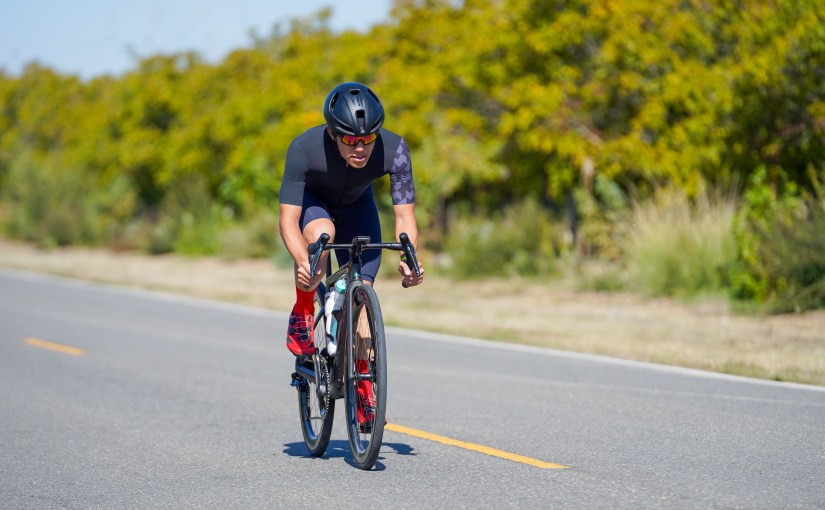
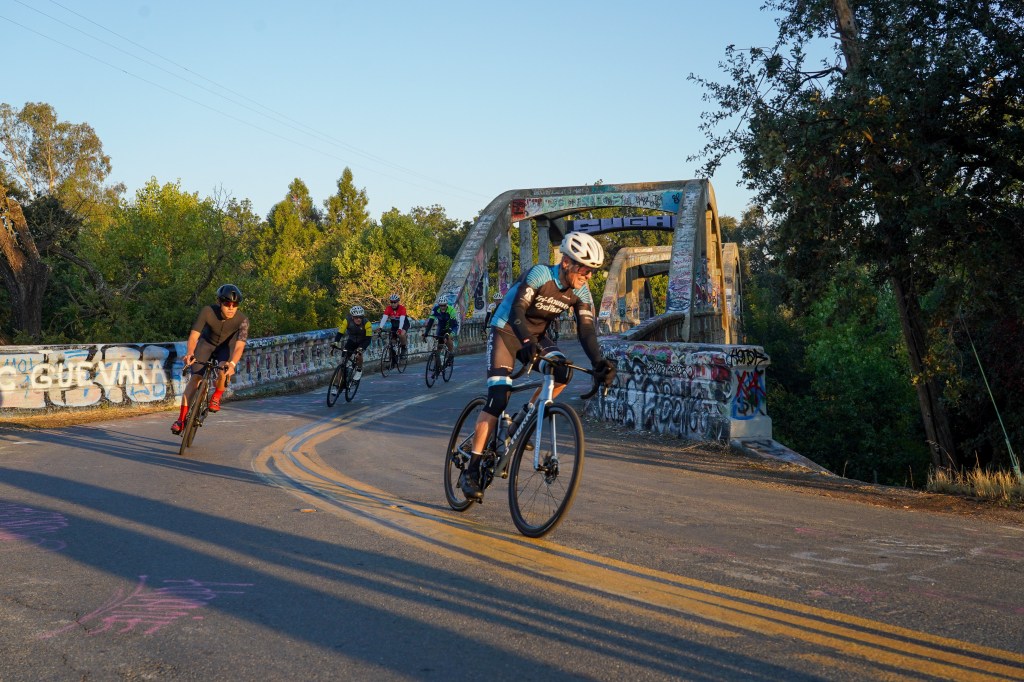
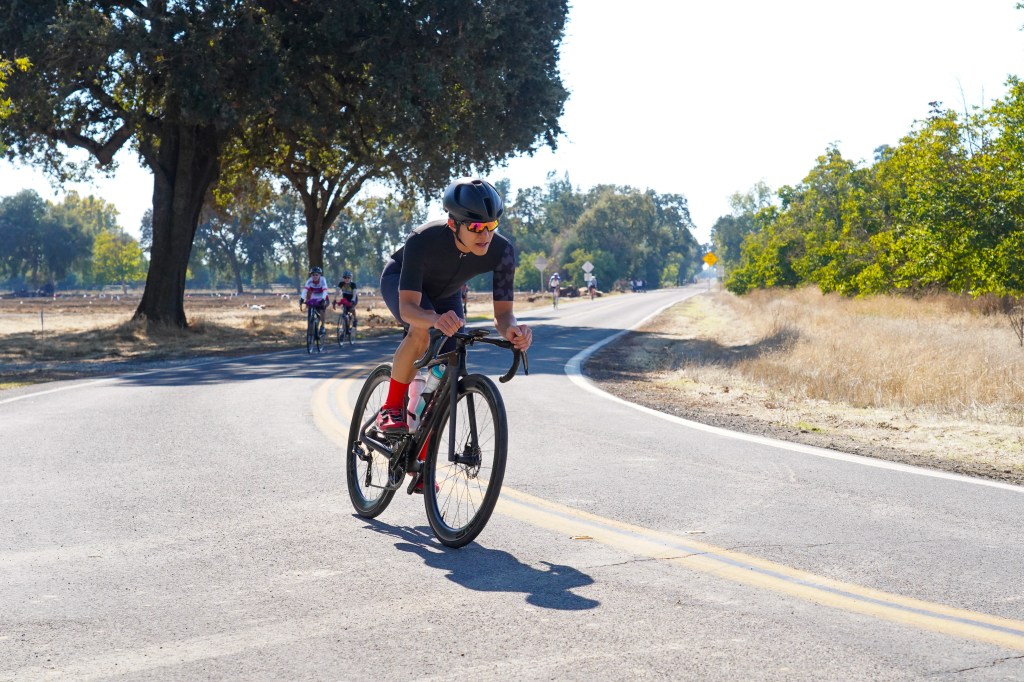
And this is me last week, at the 2025 Foxy Fall Century, a 100 mile “century” ride event in Northern California.

I’ve owned my Aeroad since the end of 2024 but I don’t ride outdoors that often. In fact this 1000 mile review is a lie – Strava says I’ve only done 865.7 miles. I guess this review can only get worse from here.

Still, I am confident in the following statement: The Aeroad CFR is a good looking (to me) bicycle that feels comfortable / compliant (enough), stiff (enough), fast (enough), and fun (enough).

Big emphatic words, I know. Let me provide more context on me and why I have these conclusions.

I am 5’6. My FTP has generally fluctuated between 250W and 265W, and my weight has been 145 to 150 pounds over the last five years. This is basically 3.8 to 4.0 W/kg. Max sprint is around 900W. I don’t race, but I like to ride fast by myself, more as a steady power rider. My Zwift racing score is around 650.

My absolute power numbers are around 50% of all riders my age, while my w/kg (power relative to weight) will be around the 90th percentile across different durations:

This is all to say, I am strong for my size but an average strength rider overall as a small human. That is why I feel like my real world impressions would match more riders than not.

My first serious road bike was a 2010 Kestrel Talon (rim brake), purchased in 2016. This was a carbon frame aero focused bike. A couple of years later, I bought a 2018 Canyon Ultimate CF SLX disc brake bike, a do-it-all / climbing bike. I’ve used aluminum wheels, then 50mm depth carbon v-shaped rim profile wheels on the Talon, then Roval CLX 32 (32mm depth) and Light Bicycle AR465 (46.5mm depth) wheels on the Ultimate. I now run Enve SES 4.5 wheels (50mm/56mm depths) on the Aeroad. The CFR model is their top-of-the-line race bike, with my setup weighing in around 7.2 kg (16 pounds) with pedals, a relatively light aero bike setup and the same weight as the Ultimate.

After nearly 10 years of training and trying various bikes and equipment, I don’t see that much of a difference in everything. When I switched from the Talon to the Ultimate and then back, I did feel the Talon was a bit vague in the power response. But, was that due to the frame, the wheels/tires (I used to run Gatorskins on the Talon), the aluminum (Ultimate had a one piece carbon handlebar/stem) handlebar, or something else? Or my imagination? I don’t really know.

I’ve gone from solid entry level to the highest end of frames, groupsets, and wheels. I’ve gotten stronger in my personal fitness.

I went a few months between riding the Ultimate and Aeroad, and I didn’t feel anything significantly different other than the bike fit. On the Ultimate, I was a size XS, and on the Aeroad I ride a smaller 2XS.

They both felt like good bikes. They feel comfortable on wider tires (I run 53 PSI on 28/30mm tires), I never feel weird in terms of too much stiffness, or “noodleyness”. I can ride them how I want, and they perform great. As my friend Marc told me years ago when I had the Ultimate, all modern bikes are great.

And I’m inclined to agree. I suspect that you want to find a low-cost bike with electronic shifting that fits you well and looks great. After that you just ride – while I am sure there are subtle differences between bikes, I suspect that the chatter from people who confidently spout how X bike is so much better or worse than another bike in Y attribute is overblown.

Unless I’m going to do apples to apples comparisons (change the frames, keep all other equipment the same), I don’t see how I can confidently say this feels a certain way because of this specific part. Bikes are systems of components, and you’re part of that system. Most hardcore cyclists are always changing one part or another, so it’s hard to really know what goes into what.

Chris from the Nero Show made a sharp point recently: reviews of race bikes by non-racers are inherently limited, because those riders are not using the bikes as intended. That is fair. I am not a racer, so what could I really say about its performance at race pace?

But here’s the irony: most cyclists aren’t racers, yet almost every high-end bike is a race bike. If that weren’t true, brands wouldn’t emphasize UCI compliance on frames that will never see a start line.

I actually learned something about the negatives of bike stiffness in the latest Silca podcast, at 42:50.

Because especially on these modern, you know, very stiff bikes, and he says an aero bike, so, you know, I mean, a lot of those are, you know, they’re pretty stiff these days. You think when you’re climbing out of the saddle and rocking the bike, Your front wheel is able to go with the loads, right? And so you don’t have a ton of lateral scrubbing, but you can hear, like that sound you hear when you’re out of the saddle, that is rear tire scrub. I think we’ve talked about on the channel before, you know, I like to call it skating. Like so many of the modern bikes have gotten so stiff that they’re actually less efficient climbing because you’re putting so much energy into like lateral scrub in that tire. Whereas a lot of the older bikes had sort of a, we call it a modal flex. They had flex in a mode or a direction that allowed the rear tire to sort of almost steer, you know, the forces of the pedal stroke help kind of steer the tire in the direction that the forces are pushing it. And so that reduces the lateral scrubbing in the tire. And I call it skating if you think of like a cross-country skate skiing, right? So not the parallel type of skis, but you see them skate skiing and how like when you angle the ski out and then you put that force and that weight onto it, that lateral movement can translate into forward movement, right? With some efficiency.

You know, bikes that are less stiff seem to have this natural ability and can climb a little bit more efficiently, but you’re also going to wear your tires out a lot less when you’re out of the saddle climbing because you have so much less of that scrub. And that’s something you can hear. You know, we’ve done a lot of testing around this and a lot of work with teams, companies, athletes. But it is kind of cool. Some of these old, like, you know, you guys know how much I love old bikes from the 70s and 80s. I mean, a lot of those bikes, like, you kind of don’t hear any tire noise when you’re out of the saddle climbing on them because they’re flexy. And then you get on some of these modern bikes and you’re like, whew, that’s, you know, that whoosh whoosh sound that’s coming up through your modern carbon wheels. You know, that is the sound of rubber being harmed.

I love hearing that sound when people climb out of the saddle. I feel like I never hear it when I’m riding, so I get jealous of others, but it turns out that this is the sound of damage to the tire!

So I’ve spent all this time basically saying the Aeroad is a good bike, as much or as at least, I suspect, as other bikes. But is it a fast bike?

At the Foxy Fall Century, I ended up doing 100 miles in 5:43, a bit above 17.5 miles per hour. 3,500 feet climbing. Roughly 12 minutes in stoppage time for bathroom breaks, water, stop signs. Speed without that was a bit over 18.3 mph.

Average power of 164w, normalized power (np) of 183w, and intensity factor of around .7. These power metrics are all personal records at this duration. I spent much of the first 1/3 of the ride in a group, and then spun off on my own.

So, I did go relatively fast. I would assume some of that comes from having a supposed top-tier aero bike, top-tier aero wheels, and a low and narrow aero position (no spacers, 37mm handlebar width, 28mm between shifter hoods) on the bike. But I was also stronger than I’ve ever been. So how do I separate all this? I can’t.

I can only just, as Ben Delaney would say, “enjoy the ride”.

The Cost of the San Francisco Giants Acquiring Vladimir Guerrero, Jr

As I write this, the MLB trade deadline is tomorrow evening. The Giants stand at 2 games below .500. They’ve waited a long time for their starting pitching to come off injuries, and over the past two weeks, we’re starting to see how impactful former Cy Young winners Blake Snell and Robbie Ray can be. There are lot of rumors that the Giants will trade Snell, but as a fan, I think if you get a true superstar to galvanize the fan base and go for winning without taking two steps back as a team, you go for it.

I don’t typically think of MLB trades, but it’s so much more complicated to understand the dynamics of near and long term planning and salary management in baseball. But I’ve looked at past comparable trades for superstars including the Juan Soto trade to the Pirates to propose this package to the Blue Jays for Guerrero, Jr.

  • Marco Luciano or Bryce Eldridge
  • Carson Whisenhunt or Hayden Birdsong
  • Camilo Doval
  • Lamont Wade Jr
  • One other prospect from the top 5-15 list, Blue Jays choice.

In summary, the Giants would trade their #1 hitting prospect, their #1 pitching prospect, their (2023) All Star closer who has 3 more years of team control, and starting first baseman who has another year of team control, and one more top 15 prospect for one of the most popular players in the game who has one more year of team control. Birdsong has played pretty well in the majors so far, and Whisenhunt and Luciano are both at AAA. Eldridge may reach AA this year, so this is a good assortment of legit major league players and almost ready players.

Wade is a legit good MLB hitter, 20% and 40% better than the average hitter the last two years in OPS+. His main issue is injuries. He’s 30 this year but still improving. Guerrero replaces him directly. Doval just turned 27, throws 100MPH. His control can be his downfall, and I think the Rogers twins could replace him ably as the Giants closers. Someone like Reggie Crawford could become the Giants’ next Doval. The Blue Jays have their own All Star closer who has been injured most of the year and could keep both or trade one.

The Blue Jays only do this trade if they’re non-committal about the massive contract decision.

The Giants could then offer Guerrero 15 years at a backloaded $460M (and replacing the last arbitration year), the second largest contract in MLB history, $100M more than the current second place, Aaron Judge. Guerrero is only 25 years old and while not a good fielder (he does have a Gold Glove), this contract takes him to his 40th birthday. He’s only 6 months older than my crush Heliot Ramos, and is already a 4 time All Star. While $460M is no small sum, the average yearly value is just above $31M. 10 years ago, the most valuable per year contract was Ryan Howard at $24M. This year, 4 players including Judge, but not Ohtani since his payments are deferred, are making at least $40M per year. That’s over a 50% increase.

This is all to say, $30M in ten to fifteen years is likely going to feel more like today’s $20M towards the end of the contract with inflation and the expansion of salaries.

How I Scored Top Tier Cycling Gear at Unbeatable Prices

Cycling is an expensive hobby. (If this were a podcast, I’d just stop talking for a minute. FULL STOP.)

However, I am generally able to buy my gear at vast discounts (50% and above), including helmets, shoes, jerseys, bibs. Even groupsets! These are typically new or open box and high-end. Yes, some (clothes specifically) of it may be off-season but that’s totally fine unless you think things change rapidly in 1 to 3 years.

I want the best possible stuff at the best possible prices and I will wait for deals. I am not someone with a special size either – if you’re really small or really big, your sizes tend to sell out last so you have access to more deals. I wear small in jerseys and bibs, have a large size head, and wear 9.5 and medium / large sized gloves. I basically compete with most people on gear.

Here are some purchases from 2024 and how I got them.

In general, I like to research what’s good. Sites like In the Know Cycling help me whitelist certain brands or items to remember. Price, along with brand can be a signal too. Is this the most or second most expensive shoe this well known brand makes? It’s probably pretty good.

Giro Imperial Road Cycling Shoes. Purchased for 199.97, currently retailing for 424.95 (61% off).

As of this writing, you can still get this on Amazon from a third part seller in new condition. In general, Amazon doesn’t have many high end cycling brands. When they do, products are almost always sold by third parties. If you see certain products you like listed, you can use CamelCamelCamel to bookmark and track the price history of an item. You can see if it’s ever been cheap and to notify you at certain price thresholds. I didn’t do that for these shoes. I just searched for them and noticed a good price when I went into the “other sellers on Amazon” box in the product page. I was in searching for pricing on various shoes and noticed this.

I also found these Muc-Off Tubeless Valves V2 for $15.01 that way – they retail for 34.99, 57% off. They were sold as previous returns in like-new condition by Amazon Resale, formerly Warehouse Deals. Mine weren’t even opened.

I did use CamelCamelCamel to find these Continental GP5000 S TR 28mm tires however.

This is the most popular version of these super fast tires – probably the best all around tire in the world right now. These typically sell for over $95 online and are rarely discounted, but I got alerted when a seller was selling them open box for just $45.88.

In recap for Amazon, as you learn about things you might like, random searches on the site from time to time and using CamelCamelCamel for automated price notifications are really useful. For what it’s worth, I don’t think I have ever found high end bibs and jerseys sold on Amazon.

I’ll give a few more examples, but here are some resources that are worth looking at:

The TrainerRoad thread is a great place for sharing and discussing deals.

BikeCloset is the best single store for deals. It’s the only store I’ll actually subscribe to for notifications. I have bought high end jerseys and bibs there from Castelli, Assos, Louis Garneau and other brands at 50% or more off for things retailing at $150 or more. For the discounts, you have to deal with them not having images for so many things and showing so many out of stock items. There are rarely any descriptions. They’re kind of saying here it is, go do the work online to see if this is the thing you want and the price you want to pay. But that actually appeals to me.

I have never purchased bibs or jerseys for over $100, which is the entry-level clothing price for most of these high end brands. Typically I am getting the first or second tier (Assos is really expensive) product tier at less than their entry level price.

BikeTiresDirect is solid, but its deal volume is nowhere close to BikeCloset – BikeTiresDirect is like a regular store that offers great pricing from time to time, while BikeCloset is a full on clearance outlet, like a Nordstrom Rack for high end bike gear. While there are plenty of sites that offer sales, I prefer to check them out on my own from time to time or see if someone mentions something on TrainerRoad rather than getting email blasts.

I bought these Giro Latch shoes, a flat pedal gravel shoe, for $63.38. (Retail: $149.98, 58% off)

GearLab loved this shoe as a super sticky but lightweight alternative to the Five Ten Freerider Pro, so I looked for deals. I found one through Google Shopping and it’s an example of finding deals by being flexible on style and colors. That’s not to say I’ll just dismiss style completely, but it’s not common for me to find the right product in my preferred color.

The exact same thing happened with getting this S-Works Recon Lace for $112.99 (Retail: $324.99, 65% off). Anything S-Works is the creme de la creme in Specialized’s product line.

Same story with the Giro Aries Spherical Helmet. Purchased for $148.51 as an open box item. (Retail: $299.95, 50% off)

This is the #1 helmet rated for safety by Virginia Tech and Giro’s highest end helmet. White isn’t my favorite color, but it’s also the coolest temperature color and make sense for a helmet focused on cooling.

To sum up, it’s really not that complicated. Research, tools, flexibility on brand and color/style can get you a long way with using the very best products at entry level pricing. If you’re curious about eBay, I think eBay is really good for niche items (that are rarely listed) in excellent to like new condition that are then auctioned. You can find special deals then because most people aren’t looking for those items. Things can slip through the cracks so to speak. I will save notifications on keywords for items that I am interested and simply wait.

If you have any tips, I’d love to hear them. Good luck!

Heliot Ramos is Really Good

Just check out this graph at Baseball Savant:

He may miss the ball (13 and 12 percentile for whiff % and strikeout %) a lot, but he has a good eye (74 percentile for walks), so he’s patient, waiting for something to hit. When he connects, whew! All in the 90 percentile, meaning he is in the top 10% of players in: Expected Slugging, Average Exit Velocity, Bat Speed, Barrel % Hard-Hit %. He fields well (85 percentile in range) and can run (72) in sprint speed but is mediocre in actual baserunning (45 percentile).